Hip or Groin Pain While Cycling? Why It Builds Slowly - and How to Fix It
Quick answer: Hip and groin pain while cycling is rarely caused by a single event - it builds gradually because the repetitive cycling movement overloads specific structures (hip flexors, adductors, or the hip joint itself) that don't have sufficient strength or mobility to handle sustained effort. Rest provides temporary relief, but returning to the same position and pattern brings the same pain back. A physiotherapy plan that addresses hip mobility, strength, and cycling mechanics is needed for lasting resolution.
Why does cycling cause hip and groin pain?
Cycling is a highly repetitive, low-impact activity - but that repetition is exactly what makes it capable of causing overuse injuries. A typical hour of cycling involves 5,000 to 6,000 pedal strokes, each requiring hip flexion and extension in a restricted range of movement. If there is limited hip mobility, poor pelvic control, or muscle imbalance in the hip stabilisers, certain structures will be exposed to repetitive stress with every stroke. Over time - particularly as training volume increases - this results in hip flexor tendinopathy, iliopsoas irritation, greater trochanteric bursitis, adductor strain, or hip joint irritation.
What structures are typically involved in cycling hip pain?
The most commonly involved structures we see at Sports Physio Ireland in cyclists with hip pain are: the iliopsoas (hip flexor) tendon at the front of the hip, particularly in riders who have a forward-leaning position; the adductors (groin muscles) in riders who generate significant power through the inner thigh; the hip abductors and ITB on the outer hip if saddle height or cleat position is not optimal; and the hip joint itself in longer-term cyclists with restricted joint mobility. Identifying the specific structure is essential to directing the correct treatment.
Does bike fit affect hip pain?
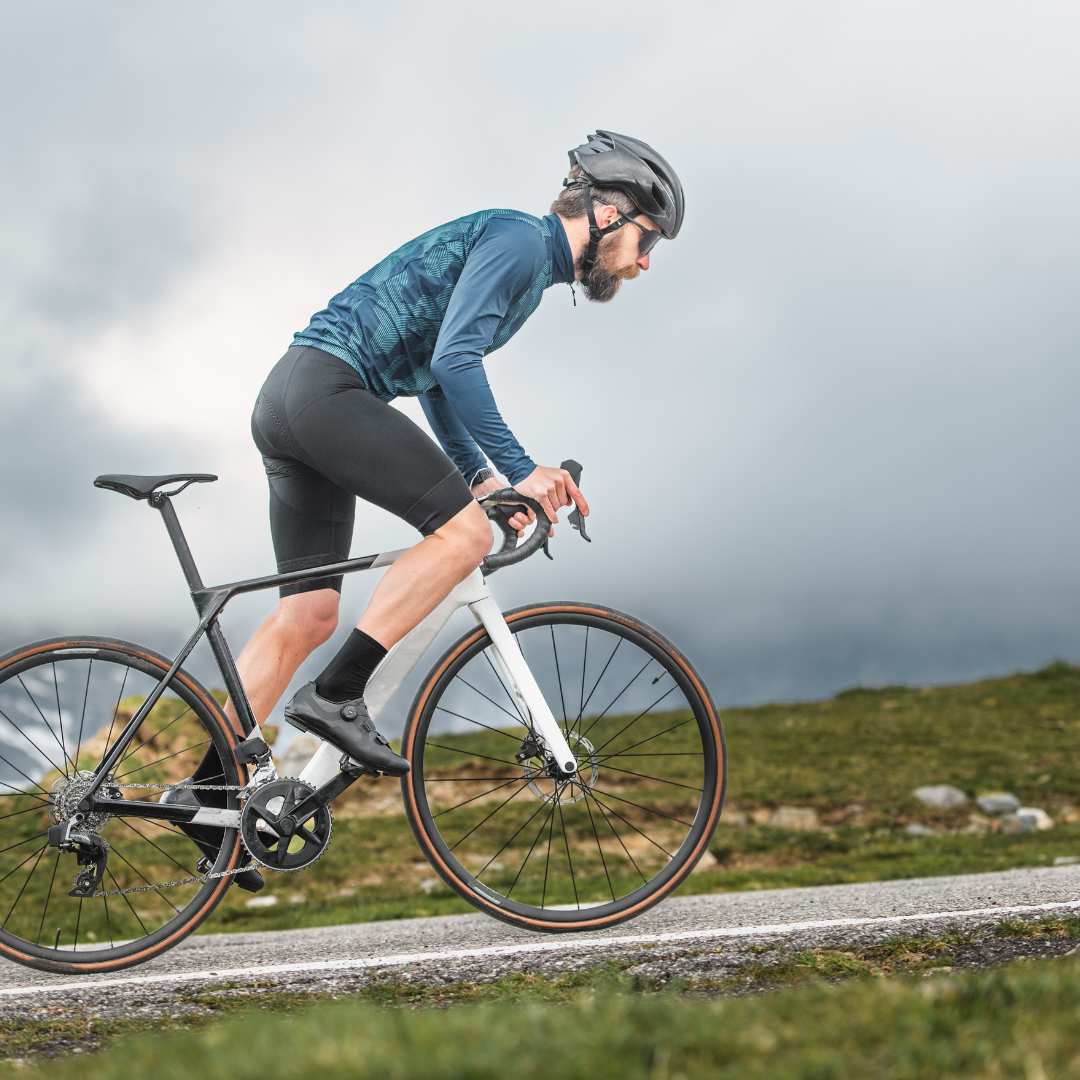
Bike fit is often a significant contributing factor in cycling hip and groin pain, and it is one of the first things we explore in our Dublin clinics when assessing a cyclist. A saddle that is too high forces excessive hip extension at the bottom of the pedal stroke, loading the hip flexors and IT band. A saddle that is too low keeps the hip in persistent flexion, irritating the front of the hip. Incorrect cleat position can alter the entire lower limb mechanics through the pedal stroke. While physio-led rehabilitation addresses the underlying physical factors, bike fit modification is often needed alongside it for full resolution.
Can I keep cycling while treating hip pain?
In most cases, yes - with appropriate modifications. Completely stopping cycling is rarely necessary and removes the training stimulus your body needs. Your physiotherapist at Sports Physio Ireland will advise on modifications such as temporary reduction in volume or intensity, avoidance of steep climbs that increase hip flexion demands, and adjustments to cycling position. As you rebuild hip strength and mobility, normal cycling is progressively reintroduced.
Understanding Why Cycling Causes Hip and Groin Pain
Cycling injuries rarely start dramatically.
There’s no single moment.
No clear cause.
Instead, it builds.
Quietly.
A bit of tightness after a longer ride.
A slight pull when pushing harder.
Something you notice… but don’t act on.
Until it starts affecting how you ride.
THE PROBLEM WITH “JUST CYCLING THROUGH IT”
Cycling feels controlled.
Predictable.
Low impact.
Which is why most people assume:
👉 “It can’t really cause injury”
But that’s exactly what makes it deceptive.
Because cycling is highly repetitive.
Same movement.
Same range.
Thousands of times.
And if something in that system isn’t working well…
👉 It gets stressed over and over again
WHY HIP AND GROIN PAIN SHOW UP
Your hip and groin are heavily involved in:
Driving the pedal
Controlling the top of the stroke
Stabilising your pelvis
If there’s:
Limited mobility
Poor control
Or inefficient mechanics
Then certain tissues start working harder than they should.
Over time:
👉 That turns into pain
WHY IT DOESN’T JUST GO AWAY
Rest helps temporarily.
But the moment you return to the same position and pattern…
👉 The same stress returns
That’s why so many cyclists feel:
Fine off the bike
Tight during rides
Worse over distance
WHAT A PROPER PHYSIO PLAN DOES
This isn’t about “resting your hip.”
It’s about changing how your body interacts with cycling.
A proper plan includes:
Restoring hip movement where it’s limited
Building control in cycling-specific ranges
Improving how force is transferred through the pedal
So your body works with the bike - not against it
THE TURNING POINT
When this is done properly, something shifts.
Not just pain.
But how cycling feels.
Smoother.
More efficient.
Less forced.
And most importantly:
👉 Sustainable
FINAL THOUGHT
If your hip or groin pain is building…
It’s not random.
It’s a pattern.
And patterns can be changed - when you know what to look for.
👉 Book your physio assessment for hip pain and get back to cycling properly
About the Author
Written by Joseph Boland, Clinical Director, Sports Physio Ireland. Joseph has been treating sports injuries and musculoskeletal conditions in Dublin for over 10 years. He holds a BSc in Physiotherapy and is a member of the Irish Society of Chartered Physiotherapists (ISCP). Sports Physio Ireland has two Dublin clinics - Dublin 2 (Fitzwilliam Street Upper) and Dublin 7 (Cabra) - and is Dublin's most reviewed physiotherapy clinic with over 1,500 five-star reviews.
